
Introduction
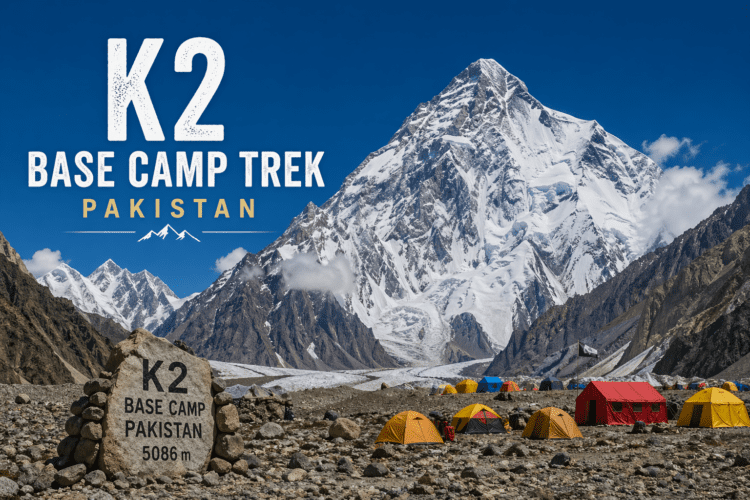
For many adventure seekers, trekking to K2 Base Camp is not just another trip—it’s a once-in-a-lifetime expedition into one of the most dramatic mountain landscapes on Earth. Known as the base of the world’s second-highest mountain, K2 stands as a symbol of raw wilderness, challenge, and unforgettable beauty.
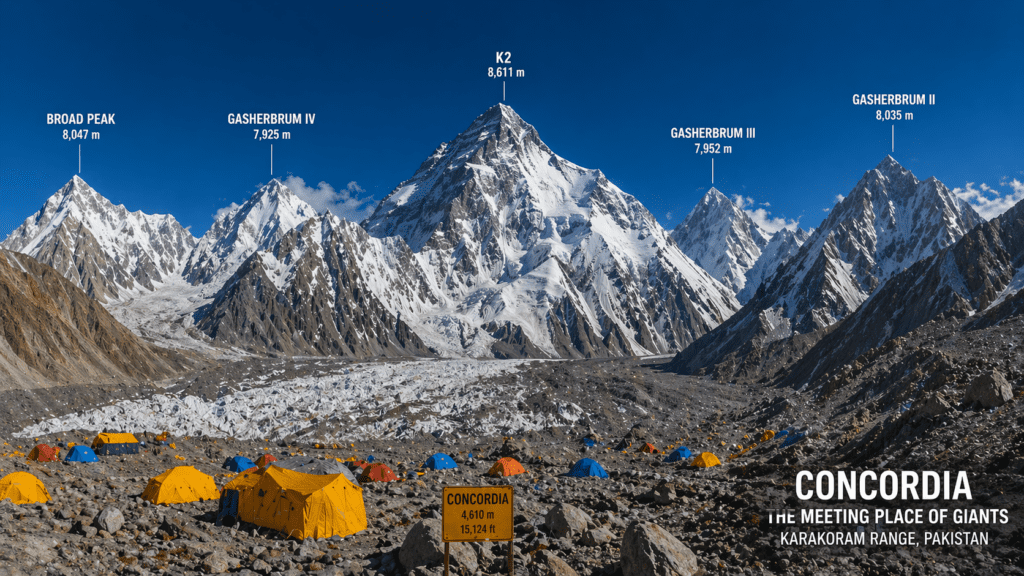
Unlike more commercial trekking routes found elsewhere, the K2 Base Camp trek offers a rare sense of isolation and authenticity. Trekkers walk through massive glacial valleys, remote villages, and some of the highest peaks on the planet. Along the way, you’ll witness legendary locations like the vast Baltoro Glacier and the awe-inspiring mountain junction at Concordia, often referred to as the “Throne Room of the Mountain Gods.”
Planning this trek, however, requires careful preparation. Questions about the K2 Base Camp trek cost, the price of guided tours, the difficulty level, and the best time to visit are among the most common concerns for first-time trekkers.
In this comprehensive guide, you’ll discover everything you need to know about trekking to K2 Base Camp—from total costs and itinerary details to choosing the right guided trek package. Whether you’re an experienced trekker or someone planning their first major expedition, this guide will help you make informed decisions and avoid costly mistakes.
What is the K2 Base Camp Trek?
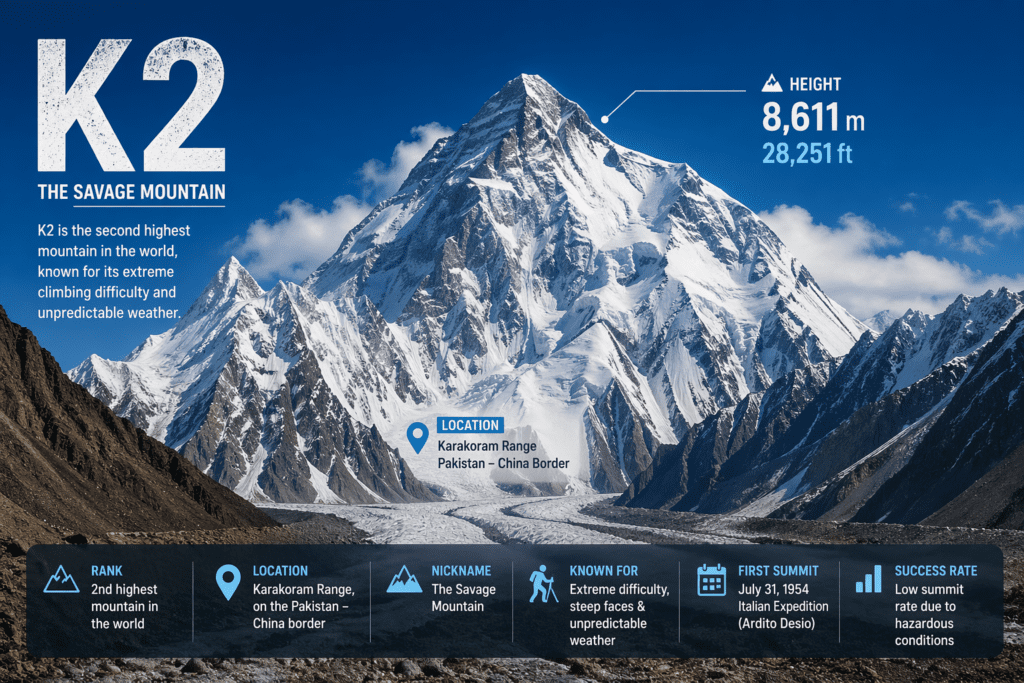
The K2 Base Camp trek is widely considered one of the most spectacular trekking routes in the world. Located deep in the Karakoram mountain range of northern Pakistan, this expedition takes trekkers into one of the most remote and untouched regions on Earth.
Unlike typical trekking destinations, the route to K2 Base Camp passes through extreme landscapes shaped by glaciers, towering rock walls, and snow-covered peaks. The journey begins near the remote settlement of Askole, which serves as the gateway to the Karakoram wilderness.
From Askole, trekkers follow a demanding route across rocky terrain and glacier systems before eventually reaching Concordia, where several major peaks surround the landscape. This region offers one of the most iconic mountain views anywhere in the world.
Trek Distance and Duration
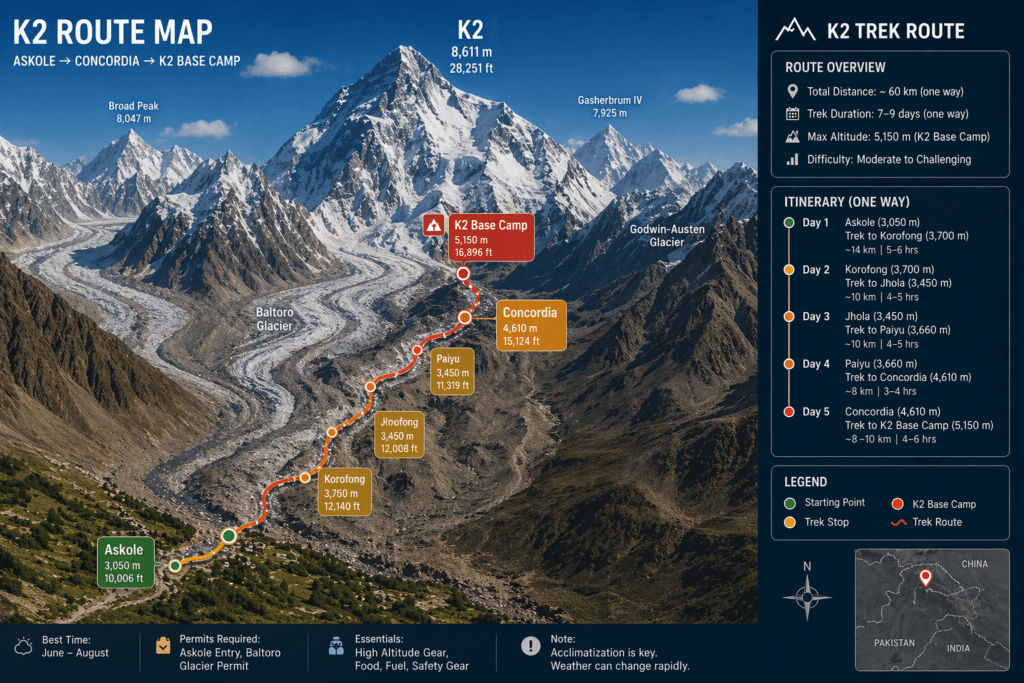
A standard trek to K2 Base Camp typically covers:
- Distance: 70–90 km one way
- Total trekking distance: 140–180 km round trip
- Duration: 12–14 trekking days
- Total trip length: 18–22 days (including travel days)
Most itineraries include acclimatization days to help trekkers adjust to high altitudes and reduce the risk of altitude sickness.
Terrain and Landscape
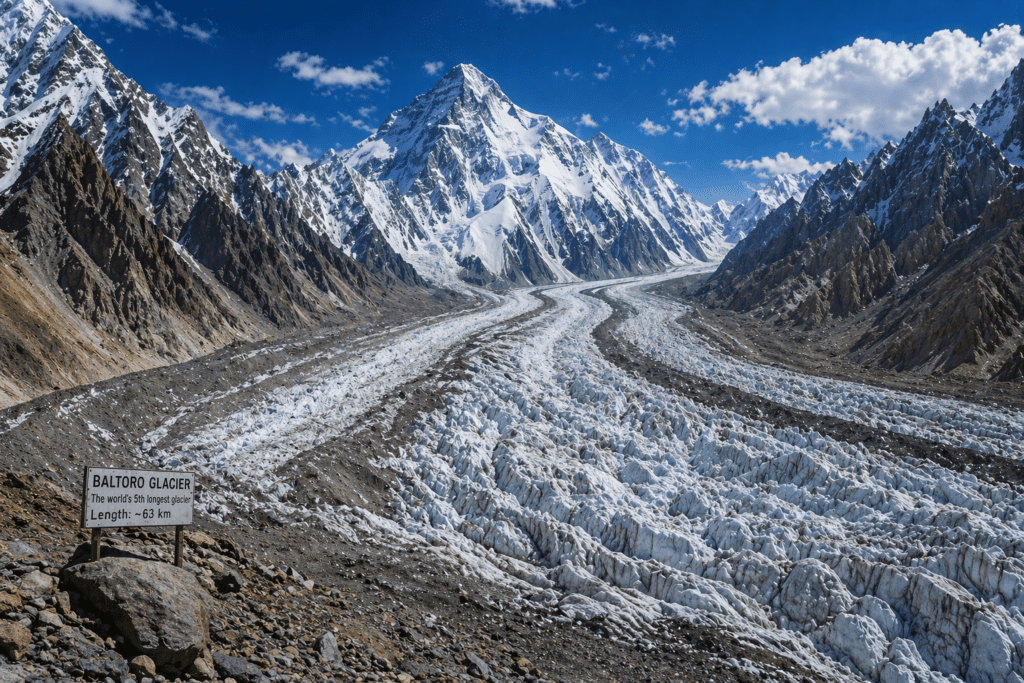
The terrain throughout the trek varies significantly and can be physically demanding. Trekkers encounter:
- Rocky trails
- Moraine fields
- Glacier crossings
- Riverbeds
- Snow-covered sections at higher elevations
Much of the trek follows the immense Baltoro Glacier, one of the longest glaciers outside the polar regions. Walking across this glacier system is both challenging and unforgettable.
Why the K2 Base Camp Trek is Famous
The K2 Base Camp trek has gained global recognition for several reasons:
- Remote Wilderness Experience
Unlike crowded trekking routes such as those in Nepal, the K2 region remains largely untouched by mass tourism. - Spectacular Mountain Views
Trekkers witness some of the world’s highest peaks, including:
- K2
- Broad Peak
- Gasherbrum I
- Gasherbrum II
3. Concordia — The Throne Room of the Gods
The convergence of massive glaciers at Concordia creates one of the most breathtaking mountain scenes in the world.
K2 Base Camp Trek Cost (Complete Breakdown)
One of the most frequently asked questions about trekking to K2 Base Camp is: How much does the K2 Base Camp trek cost?
The total price can vary significantly depending on the type of trek package, services included, and travel arrangements. Understanding the full cost breakdown helps trekkers budget properly and avoid unexpected expenses.
Average K2 Base Camp Trek Cost
In general, the total cost of the K2 Base Camp trek ranges between:
$1,500 to $5,000+ per person
Here’s a realistic breakdown of major expenses.
Permit Fees
Foreign trekkers must obtain special permits to enter restricted regions of northern Pakistan.
Typical permit cost:
$200–$500 per person
These permits are usually arranged by trekking companies and included in guided packages.
Guide Fees
Hiring an experienced guide is strongly recommended due to the remote nature of the trek.
Typical guide fees:
$30–$50 per day
For a 14-day trek:
$420–$700
Guides provide:
- Navigation
- Safety support
- Local knowledge
- Communication assistance
Porter Costs
Porters carry heavy equipment such as tents, food supplies, and personal gear.
Typical porter fees:
$20–$30 per day
For multi-day treks, porter costs can total:
$300–$500+
Most trekking packages include porter services.
Food and Camping Costs
Food supplies must be transported into remote regions, increasing overall expenses.
Typical daily food cost:
$15–$25 per day
Total estimated:
$250–$400
Camping equipment such as tents and cooking gear is usually provided in organized treks.
Internal Transportation Costs
Travel within Pakistan typically includes:
- Flight to Skardu
- Jeep transport to Askole
Estimated transportation cost:
$150–$300
Weather delays may occasionally require additional travel arrangements.
Insurance Costs
Travel insurance that covers high-altitude trekking is essential.
Typical cost:
$100–$300
Insurance should cover:
- Emergency evacuation
- Medical expenses
- Trip cancellations
Estimated Cost Summary Table
| Expense | Estimated Cost |
| Permits | $200–$500 |
| Guide | $420–$700 |
| Porters | $300–$500 |
| Food | $250–$400 |
| Transport | $150–$300 |
| Insurance | $100–$300 |
Total Estimated Cost:
$1,500–$5,000+
Many trekkers prefer guided tour packages because they simplify logistics and reduce risk in remote areas.
Well-organized guided treks typically include permits, accommodation, meals, transportation, and professional support, making them a convenient option—especially for international visitors unfamiliar with the region.
K2 Base Camp Trek Price by Package Type
The K2 Base Camp trek price varies significantly depending on the type of services included, group size, and comfort level. Most trekking companies offer three main types of packages: budget, standard, and premium.
Understanding these differences helps trekkers choose a package that matches both their expectations and budget.
Budget K2 Base Camp Trek Packages
Budget trekking packages are designed for experienced trekkers who are comfortable with basic facilities and minimal support. These packages are the most affordable way to complete the trek but may require more self-reliance.
Typical Price Range:
$1,500 – $2,500 per person
What’s Usually Included
- Trekking permits
- Shared camping tents
- Basic meals
- Shared porter services
- Local trekking guide
- Basic camping equipment
Who Should Choose Budget Packages?
Budget packages are best suited for:
- Experienced trekkers
- Adventure travelers on limited budgets
- Those comfortable with minimal comfort
- Travelers joining group expeditions
While budget options reduce costs, they still provide access to the same spectacular landscapes, including views of the famous Baltoro Glacier and surrounding Karakoram peaks.
Standard K2 Base Camp Trek Packages (Most Popular)
Standard packages offer a balanced combination of affordability and comfort. These are the most commonly selected options among international trekkers.
Typical Price Range:
$2,500 – $3,500 per person
What’s Usually Included
- Government permits
- Professional trekking guide
- Porters for personal gear
- Meals throughout the trek
- Quality camping equipment
- Internal transportation
- Logistics support
Why Most Trekkers Choose Standard Packages
Standard packages provide:
- Better safety support
- Reliable logistics
- Comfortable camping setup
- Reduced physical strain
For most first-time visitors trekking to K2 Base Camp, this level of service offers the best overall experience without significantly increasing costs.
Many guided trekking tours available online fall into this category and are often considered the safest and most convenient choice for international travelers.
Premium K2 Base Camp Trek Packages
Premium trekking packages are designed for travelers seeking maximum comfort and personalized service. These packages typically include enhanced logistics and more experienced support staff.
Typical Price Range:
$3,500 – $5,000+ per person
What’s Usually Included
- Private tents
- Premium-quality camping equipment
- Experienced international guides
- Dedicated cooking staff
- Satellite communication
- Medical support
- Flexible itinerary adjustments
Who Should Choose Premium Packages?
Premium packages are ideal for:
- First-time high-altitude trekkers
- Travelers seeking maximum comfort
- Groups wanting personalized services
- Expedition-style trekking experiences
Although more expensive, premium packages provide additional peace of mind when trekking in remote regions.
K2 Base Camp Trek Itinerary (Day-by-Day Route)
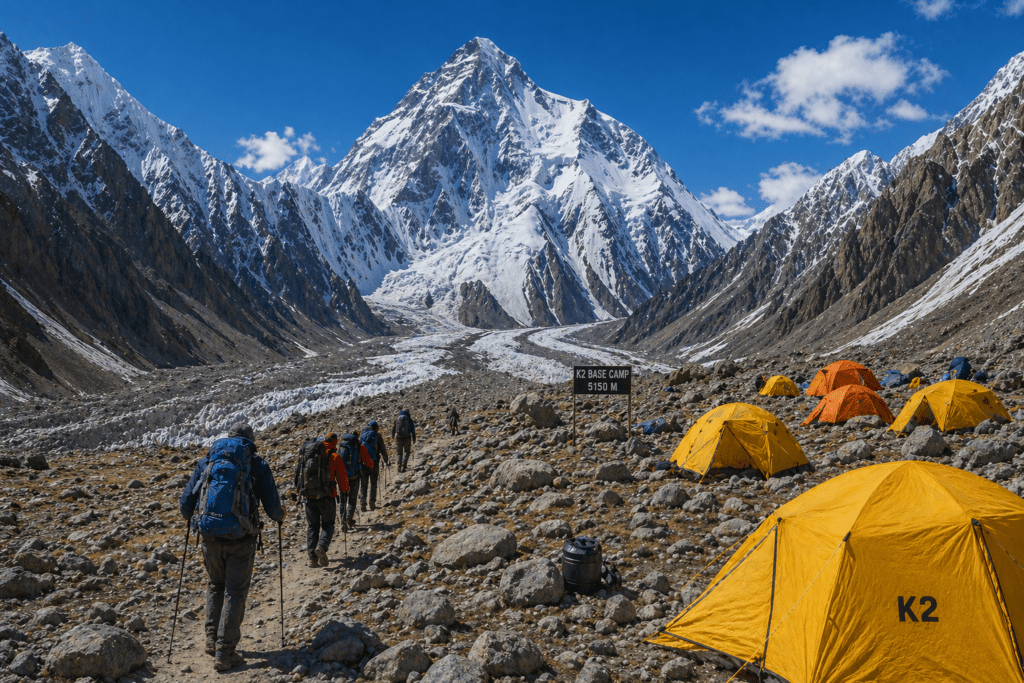
A carefully planned itinerary is essential for success when trekking to K2 Base Camp. Most standard treks follow a structured route designed to allow proper acclimatization and reduce altitude-related risks.
Below is a typical 18–21 day itinerary followed by many trekking operators.
Day 1 – Arrival in Islamabad
Trekkers usually arrive in Islamabad, the capital city, where initial briefing sessions take place.
Activities include:
- Meeting trekking team
- Equipment inspection
- Permit verification
- Overnight stay in hotel
This day allows trekkers to prepare mentally and physically for the journey ahead.
Day 2 – Flight to Skardu
Trekkers fly from Islamabad to Skardu, a scenic mountain town that serves as the gateway to the Karakoram region.
Flight duration:
Approximately 1 hour
Highlights:
- Spectacular aerial views
- First sight of Karakoram peaks
- Equipment preparation
Due to unpredictable weather, flight delays are common, so flexibility is important.
Day 3 – Drive to Askole
From Skardu, trekkers travel by jeep to the remote village of Askole, the official starting point of the trek.
Travel time:
6–8 hours
Highlights:
- Remote mountain scenery
- First glimpse of rugged terrain
- Introduction to local trekking staff
This is the final point accessible by road.
Day 4 – Trek from Askole to Jhula
Distance:
Approximately 20 km
Terrain:
- River crossings
- Rocky pathways
Trekkers gradually enter the wilderness and begin adapting to the terrain.
Day 5 – Jhula to Paiyu Camp
Distance:
Around 22 km
Paiyu Camp is known for offering the first clear view of towering Karakoram peaks.
This is often considered one of the most scenic days of the trek.
Day 6 – Rest Day at Paiyu (Acclimatization)
Acclimatization days are critical for altitude adjustment.
Activities include:
- Short hikes
- Rest and hydration
- Equipment checks
Skipping acclimatization days increases altitude sickness risk.
Day 7 – Paiyu to Urdukas Camp
Trekkers begin walking along the famous Baltoro Glacier, one of the longest glaciers outside the polar regions.
This section introduces glacier trekking conditions.
Day 8 – Urdukas to Goro II
Terrain becomes increasingly rugged.
Trekkers experience:
- Ice formations
- High-altitude terrain
- Expansive glacier views
This stage is physically demanding but highly rewarding.
Day 9 – Goro II to Concordia
Trekkers reach the legendary Concordia, often called the “Throne Room of the Mountain Gods.”
This location offers breathtaking views of several major peaks.
Many trekkers consider this moment the highlight of the entire journey.
Day 10 – Trek to K2 Base Camp
This is the most anticipated day of the trek.
Trekkers reach the base of the world’s second-highest mountain—K2 Base Camp.
Highlights include:
- Close views of K2
- Photography opportunities
- Celebrating achievement
This marks the culmination of the expedition.
Day 11–17 – Return Journey
The return journey follows the same route back through:
- Concordia
- Goro II
- Urdukas
- Paiyu
- Askole
Although physically demanding, the descent typically feels easier than the ascent.
Final Days – Return to Skardu and Islamabad
After reaching Askole, trekkers travel back to Skardu and later fly to Islamabad to complete the expedition.
Most itineraries include buffer days in case of weather delays.
Best Guided Tours to K2 Base Camp
For most trekkers, joining a guided expedition is the safest and most practical way to complete the journey to K2 Base Camp. The region is remote, weather conditions can change quickly, and navigation across glaciers requires experience and local knowledge.
Guided tours simplify the entire process by handling permits, logistics, equipment, and safety measures. Instead of worrying about complicated planning, trekkers can focus entirely on the adventure itself.
Below are some of the most common types of guided treks available.
Standard K2 Base Camp Guided Expedition (Most Popular)
Typical Duration: 18–21 days
Average Price Range: $2,500–$3,500
Difficulty Level: Challenging
Standard guided expeditions are the most commonly booked option for international trekkers. These tours offer a strong balance between comfort, affordability, and safety.
Highlights
- Fully organized trekking permits
- Professional local guides
- Dedicated cooking staff
- High-quality camping equipment
- Meals throughout the expedition
- Safety-focused itinerary
- Acclimatization planning
This type of expedition is ideal for trekkers who want reliable logistics without paying premium-level prices.
Advanced Trekking Expedition with Extended Route
Typical Duration: 21–24 days
Average Price Range: $3,000–$4,500
This package includes additional acclimatization days and extended trekking routes, allowing trekkers to explore more remote sections of the Karakoram region.
Highlights
- Longer trekking experience
- More acclimatization days
- Reduced altitude risk
- Additional scenic locations
- Smaller group sizes
This option is suitable for trekkers who want a more immersive and safer experience at high altitudes.
Private K2 Base Camp Trek Packages
Typical Duration: Flexible
Average Price Range: $4,000–$5,500+
Private trekking expeditions offer the highest level of customization and comfort. These are ideal for small groups, families, or travelers who prefer personalized services.
Highlights
- Flexible itinerary
- Private guides
- Dedicated porter teams
- Custom meal planning
- Premium camping equipment
- Enhanced safety support
Private treks are often chosen by trekkers seeking a tailored experience without sharing group resources.
Why Choosing a Guided Trek is Highly Recommended
Trekking to K2 Base Camp without professional support can be risky, especially for international visitors unfamiliar with the terrain and logistics.
Here are the key reasons most trekkers prefer guided tours.
Safety and Navigation
The trek crosses complex glacier systems, including large sections of the Baltoro Glacier, where navigation errors can be dangerous.
Professional guides:
- Understand terrain risks
- Monitor weather conditions
- Assist with emergency situations
Permit and Logistics Management
The region surrounding K2 requires official permits, coordination with local authorities, and strict compliance with trekking regulations.
Guided expeditions handle:
- Government permits
- Entry permissions
- Staff coordination
- Equipment transportation
This removes a major burden from trekkers.
Medical and Emergency Preparedness
Altitude sickness is one of the most common risks during high-altitude trekking.
Professional expeditions often include:
- Medical kits
- Emergency evacuation plans
- Satellite communication
- Altitude monitoring
These services can be lifesaving in remote environments.
Best Time to Trek to K2 Base Camp
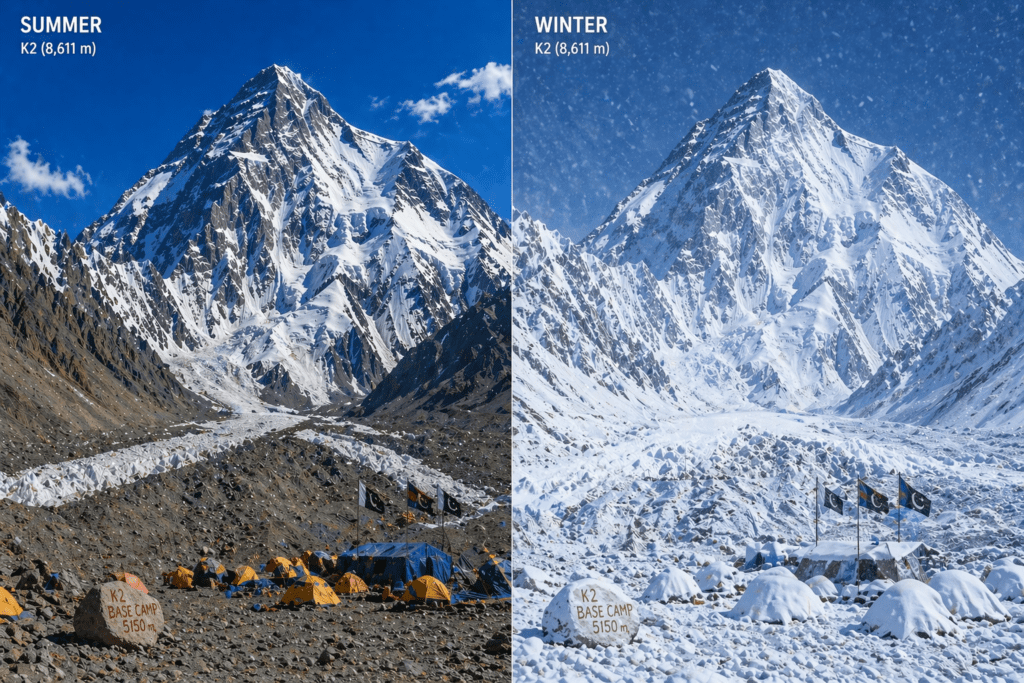
Choosing the right season plays a major role in the success of the trek to K2 Base Camp. Weather conditions in the Karakoram region are highly unpredictable, and trekking outside the ideal months significantly increases risk.
Peak Trekking Season (Best Months)
The best time to trek is:
June to September
These months offer the most stable weather conditions and safer trekking routes.
June – Start of Trekking Season
June marks the beginning of the trekking window.
Conditions:
- Snow begins melting
- Trails become accessible
- Fewer crowds
This is a good month for trekkers who prefer quieter trails.
July – Most Popular Month
July is widely considered the peak trekking month.
Conditions:
- Warmer daytime temperatures
- Clear mountain views
- Stable weather
Most expeditions are scheduled during this period.
August – Best Overall Conditions
August offers some of the most reliable trekking conditions.
Benefits:
- Clear skies
- Moderate temperatures
- Ideal photography conditions
This month is particularly popular among photographers and experienced trekkers.
September – End of Season
September marks the final trekking window before winter conditions return.
Advantages:
- Fewer trekkers
- Crisp mountain views
- Cooler temperatures
However, snowfall risks increase toward the end of the month.
Months to Avoid
Avoid trekking during:
- October to May
Reasons include:
- Heavy snowfall
- Extreme cold
- Blocked trails
- Dangerous weather conditions
These months are unsuitable for trekking to K2 Base Camp.
How Difficult is the K2 Base Camp Trek?
The K2 Base Camp trek is considered one of the most challenging trekking experiences in the world. Unlike many popular trekking routes, this expedition demands strong physical fitness, mental resilience, and careful preparation.
Difficulty Level Overview
Difficulty rating:
Challenging to Very Challenging
Key factors include:
- Long trekking distances
- High altitude exposure
- Remote terrain
- Glacier crossings
Trekkers should expect physically demanding hiking days lasting 6–8 hours on average.
Altitude Challenges
One of the biggest challenges is altitude.
The elevation at K2 Base Camp is approximately:
5,150 meters (16,896 feet)
At this height, oxygen levels are significantly lower, increasing the risk of altitude sickness.
Common Symptoms of Altitude Sickness
- Headaches
- Nausea
- Fatigue
- Shortness of breath
- Dizziness
Acclimatization days are built into most itineraries to reduce these risks.
Physical Fitness Requirements
Trekkers preparing for this expedition should:
- Train at least 8–12 weeks before departure
- Practice long-distance hiking
- Build leg strength
- Improve cardiovascular endurance
Fitness preparation greatly increases the chances of completing the trek successfully.
What is Included in Most K2 Base Camp Trek Packages?
Understanding what is included in trekking packages helps trekkers evaluate value and avoid unexpected expenses.
Most guided treks to K2 Base Camp include essential services required for remote mountain travel.
Typical Package Inclusions
Most trekking packages include:
Trekking Permits
All necessary permits required to enter restricted mountain regions are arranged in advance.
Professional Guides
Experienced guides assist with:
- Navigation
- Safety
- Trek coordination
Guides are essential for safe glacier travel.
Porters
Porters carry heavy equipment such as:
- Tents
- Cooking gear
- Supplies
This allows trekkers to focus on hiking rather than carrying heavy loads.
Camping Equipment
Most packages provide:
- Tents
- Sleeping pads
- Cooking equipment
- Dining tents
High-quality equipment improves comfort during long expeditions.
Meals During Trek
Standard meal plans typically include:
- Breakfast
- Lunch
- Dinner
Meals are prepared by dedicated cooking teams.
Packing List for K2 Base Camp Trek
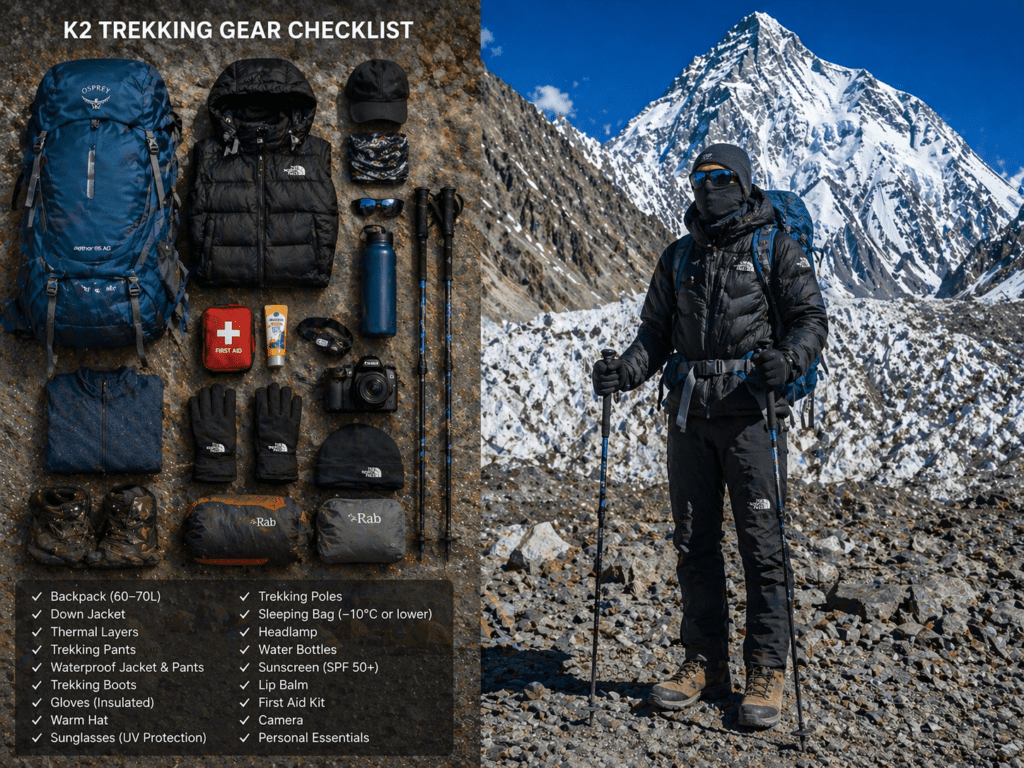
Preparing the right gear is one of the most important steps before trekking to K2 Base Camp. Weather conditions in the Karakoram range can change quickly, and trekkers must be equipped to handle cold temperatures, strong winds, and high-altitude environments.
A well-planned packing list not only improves comfort but also enhances safety during the expedition.
Essential Clothing
Layered clothing is recommended due to fluctuating temperatures at different elevations.
Must-have clothing items include:
- Thermal base layers
- Waterproof trekking jacket
- Insulated down jacket
- Trekking pants
- Fleece jacket
- Warm gloves
- Wool socks
- Sun hat
- Thermal hat
At higher altitudes, nighttime temperatures can drop below freezing even during summer months.
Trekking Equipment
Proper trekking equipment ensures comfort and safety across glacier terrain, especially along sections of the Baltoro Glacier.
Essential gear includes:
- Trekking boots (waterproof recommended)
- Trekking poles
- Backpack (40–60 liters)
- Sleeping bag (rated for cold temperatures)
- Headlamp with extra batteries
- Sunglasses with UV protection
High-quality trekking boots are particularly important due to uneven terrain and glacier surfaces.
Personal Essentials
Personal items help maintain hygiene and health throughout the expedition.
Recommended items:
- Sunscreen (high SPF)
- Lip balm
- Personal medication
- First aid kit
- Water purification tablets
- Wet wipes
- Reusable water bottles
Hydration plays a crucial role in preventing altitude sickness.
Permits Required for K2 Base Camp Trek
Trekking in the Karakoram region requires special permits due to security regulations and restricted-area policies. These permits are mandatory for all foreign trekkers visiting K2 Base Camp.
Restricted Area Permit
Foreign trekkers must obtain a Restricted Area Permit issued by Pakistani authorities.
This permit allows access to:
- High-altitude regions
- Border-sensitive zones
- Glacier trekking routes
Most guided trekking operators handle permit arrangements on behalf of participants.
Trekking Permit
In addition to restricted-area permits, trekkers must obtain general trekking permits required for entering national park regions.
Permit costs typically range between:
$200–$500
These fees are often included in organized trekking packages.
Why Permits Are Important
Permits help authorities:
- Monitor trekkers
- Maintain regional security
- Ensure environmental protection
Attempting to trek without proper permits is not allowed and may result in fines or removal from the trekking area.
K2 Base Camp Trek vs Everest Base Camp Trek
Many trekkers compare the route to K2 Base Camp with the popular trek to Everest Base Camp. While both offer world-class mountain scenery, they differ significantly in difficulty, cost, and accessibility.
Comparison Overview
| Feature | K2 Base Camp | Everest Base Camp |
| Difficulty | Very Challenging | Moderate to Challenging |
| Crowds | Low | High |
| Infrastructure | Basic | Well-developed |
| Cost | Higher | Moderate |
| Remoteness | Very Remote | Accessible |
| Experience Level | Advanced | Beginner-friendly |
Which Trek is Better?
Choosing between these treks depends on personal goals and experience.
Choose K2 Base Camp if:
- You want a remote adventure
- You prefer fewer crowds
- You seek extreme trekking challenges
Choose Everest Base Camp if:
- You are new to high-altitude trekking
- You prefer established infrastructure
- You want easier logistics
Both treks provide unforgettable experiences, but the journey to K2 remains one of the most demanding trekking adventures available.
Tips Before Trekking to K2 Base Camp
Proper preparation greatly improves the chances of completing the trek successfully.
Here are essential tips every trekker should follow.
Train Before the Trek
Physical preparation is critical.
Recommended training includes:
- Long-distance hiking
- Stair climbing
- Strength training
- Cardiovascular workouts
Training should begin at least 8–12 weeks before departure.
Choose Reliable Trek Operators
Selecting experienced operators ensures safety and smooth logistics during the trek.
Reliable operators provide:
- Certified guides
- Medical preparedness
- Quality equipment
- Emergency planning
This is particularly important when trekking to remote regions like K2 Base Camp.
Book Early
Most trekking seasons operate between June and September, and popular expeditions fill quickly.
Booking early helps secure:
- Preferred dates
- Reliable operators
- Competitive pricing
Early planning also allows more time for physical preparation.
Book Your K2 Base Camp Trek (Verified Tours)
For trekkers planning their journey to K2 Base Camp, choosing a verified guided tour simplifies planning and ensures safety in remote mountain regions.
Organized tours typically include:
- Required permits
- Professional guides
- Camping equipment
- Meals during trekking
- Transportation logistics
- Emergency support
Verified K2 Base Camp Trek Tour:
- Professional Guide
-
Hotel pickup and drop-off
-
Lunch, Dinner, Breakfast, and more
19-Day K2 Base Camp & Concordia Trek
- Licensed professional local guide
- Lunch, Dinner, and Breakfast
- Trenspot and more
21 Days Guided Trek in K2 Base Camp
- Breakfast and Dinner for 21 Days
- All trekking Logistics
- Licensed Professional guide and more
Frequently Asked Questions (FAQ)
Adding FAQ content helps answer common user questions and improves SEO rankings.
How long does the K2 Base Camp trek take?
Most trekking itineraries take between 18 to 22 days, including travel days, acclimatization, and return journeys.
How much does the K2 Base Camp trek cost?
The average K2 Base Camp trek cost ranges between:
$1,500 to $5,000+
Prices vary depending on group size, services included, and package type.
Is the K2 Base Camp trek dangerous?
While challenging, the trek is generally safe when completed with experienced guides and proper preparation. Risks mainly involve altitude sickness and unpredictable weather.
Do I need a guide for the K2 Base Camp trek?
Yes, guided trekking is strongly recommended due to restricted-area permits, glacier navigation, and remote terrain conditions.
Can beginners do the K2 Base Camp trek?
The trek is best suited for experienced hikers. Beginners should complete smaller high-altitude treks before attempting this expedition.
No Comments
Leave Comment